organic-waste

Food scraps can be turned into building materials

Today, pineapple, potatoes, mushrooms, corn, oranges and bananas belong to the staple food products. Tomorrow, they could be the backbone of our cities, according to a new report by a major engineering company.

Corn walls and rice bricks? Possible; A multinational construction company believes it is and proposes the recycling of organic waste for insulation, boards and other building materials. Throughout the Western world, construction is a major source of waste and pollution. The construction industry accounts for a significant proportion of CO2 emissions and millions of tonnes of waste, much of which can be attributed to the linear economy that runs the industry, which is based on a “take, make, waste” model, exploiting raw resources and recycling little.

In an effort to tackle this issue, construction firm Arup argues that industry should move towards a circular feedback economy that aims to recycle as much as possible, throw out as little waste as possible and use as few raw resources as possible. . They even believe that this can happen using food scraps as a material. About half of all food produced in the world ends up in the trash, representing about 60 million tons of food. Applying circular thinking to this issue in conjunction with construction waste could mean less product going to landfill, while at the same time building in recyclable building materials to keep construction waste out of landfills. They also consider that some materials could be grown normally as by-products, eliminating waste entirely. In the Urban Bio Loop exhibition, Arup envisions future buildings made from pineapples, potatoes, mushrooms, corn, oranges, bananas and more.

The company states in its report that the well-known "Business as usual" scenario is not an option for a sustainable future and that different development models must be found in order for our society to continue to grow and prosper in the future. He adds: “The construction industry needs to reflect this urgent need for change – possibly more than other industries. In fact, it is still permeated by various detrimental factors, such as the use of high-strength materials, irreversible building solutions, low-performance and manufacturing processes. The use of organic waste in construction would potentially allow the exploitation of its unrecognized value with a positive impact not only from an environmental point of view, but also from a technical, social and economic point of view," the researchers emphasize in their multi-page report.

In addition to determining the various environmental impacts of such an effort, the team also makes recommendations for the use of some materials. For example, they suggest incorporating peanut shells into flat boards for interior partitions, potato skins and cork for thermal insulation due to their low conductivity, fire performance and water repellency. Fibrous residues from bananas and from harvesting pineapples and bananas that are so light and durable can be incorporated into carpets and rugs.

Article source: www.itrofi.gr

Chanel: Το εντυπωσιακό κατάστημα από υαλότουβλα στο Άμστερνταμ

Chanel: The stunning glass block store in Amsterdam

His new store of Chanel located on the busy shopping street PC Hooftstraat at Amsterdam and is a definite architectural achievement. The impressive thing about the project is that it stands among so many classic Dutch houses with a storefront made entirely of solid glass blocks.

More specifically, it is a creation by Dutch architects MVRDV. In fact, the building was created in such a way as to match the original historical structure and the translucent glass bricks make up half of the building. In order to create the impressive facade, the architectural firm had to create certain tools from scratch, such as a transparent UV-bonded glue. Even more curious were the manufacturing techniques that had to be used to create the invisible aesthetic, including the use of… whole milk as a layer between the glass blocks!

See the impressive details..


Πώς να τρυπήσετε ένα υαλότουβλο

How to drill a glass block

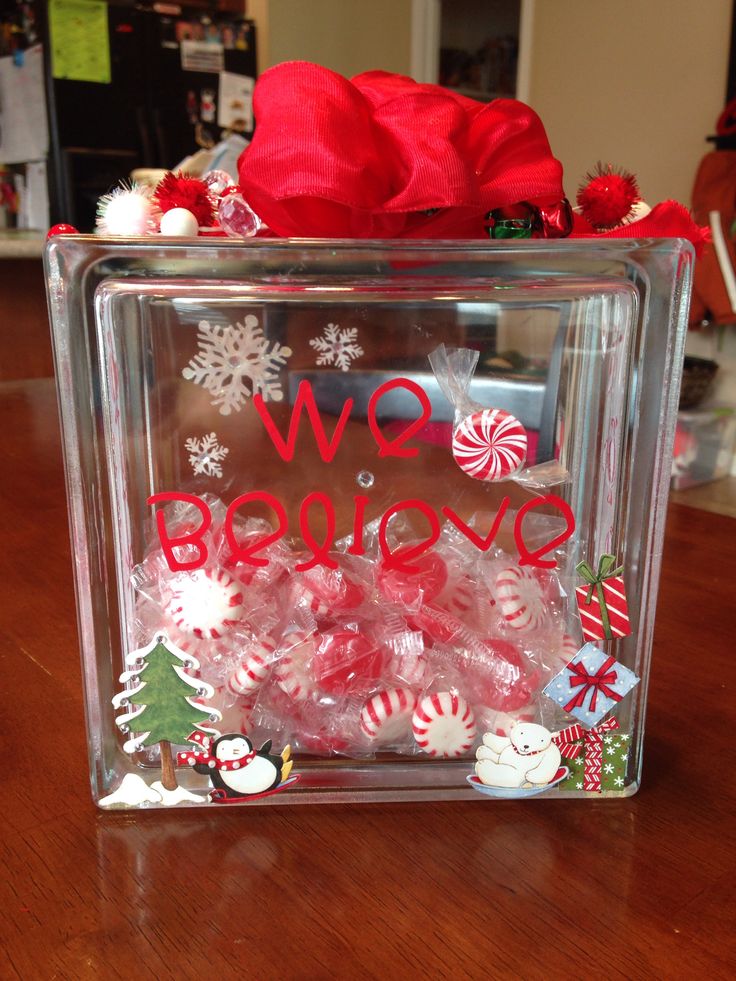
Christmas is approaching, the mood is in the red of the holidays and the ideas for creative occupation of the mind (and not only) are increasing. Thus, the idea of decorating glass blocks was born – not just the space with glass blocks, but the decoration of the glass block itself, both inside and out. We will mainly focus on interior decoration.

So how can we decorate a glass block on the inside? Of course, we have to drill holes in it first! Follow these steps with good cheer:

  1. Using a diamond drill bit, carefully drill the hole we want into the glass block, making sure that the point is as close to the center of its side as possible. The movement of the drill bit should be vertical, steady, and without rushing.

  2. Throughout the drilling process, pour water over the area to prevent the drill bit from overheating and the possibility of breaking the glass block.

  3. After about 4–5 minutes, the hole will be complete. Clean the glass block with water, both inside and out, let it dry and it is ready for decoration!

Inside the glass block we can place lights, gravel, sand or even water. The only thing that limits us is the size of the hole we made. Then, we can deal with the exterior decoration. There are many ways: decoupage technique, vinyl stickers, painting or any other idea that activates your creativity. The result will definitely be impressive!

Good luck and happy holidays!


Add glass blocks to your space

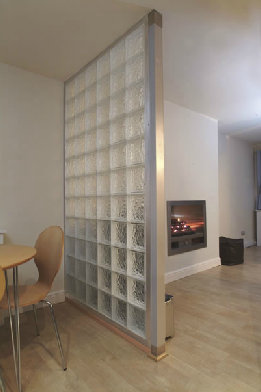
Glass blocks is a way to do something different inside your home. If you are tired of the classic room divider, i.e. the wall, we have a wonderful suggestion for something alternative. The well-known glass blocks. Instead of the classic ones without color you can choose some of the different colors they have and make incredible combinations, or even put patterned bricks in between. It will give your home another style that many will envy.


You can also use them built into the wall.


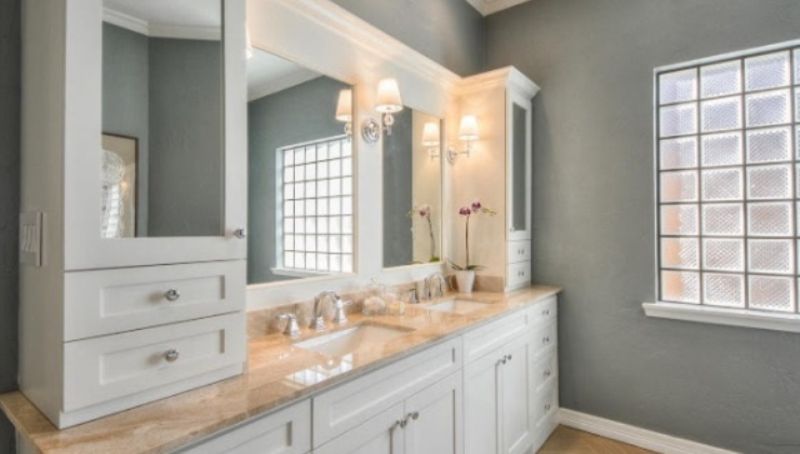
Or even for your bathroom...


Transparent glass blocks that ensure energy from the sun

The houses of the future will be able to be built with structural systems that will convert sunlight into usable energy.

Scientists dealing with renewable energy sources are developing a revolutionary new technology, which is a continuation of the effort to construct buildings that will themselves generate the required energy for their functions.

The Solar Squared glass blocks are designed to be installed in either new construction or renovations of old buildings and will be on the market in 2018 according to the University of Exeter research team.

Solar Squared glass blocks are similar to traditional glass bricks, which replace regular bricks with the aim of allowing sunlight to pass through buildings. Each Solar Squared glass blocks through "smart" optical technology concentrates the incoming solar radiation into small solar cells, enhancing the total energy produced by each cell. The electricity produced can be used to power the building, to store in batteries or to charge electric vehicles.

Given that buildings today consume more than 40% of the electricity produced worldwide, Solar Squared technology can have a significant impact on reducing this amount at a relatively low cost.

Article source: DailyMail